The MMC platform drills its foundations using two machine designs working alongside each other. The primary method is conventional ground-based drilling crews working ahead of the topside construction team — the fast, well-understood approach that builds the bulk of the corridor wherever ground access is available. The secondary method is a viaduct foundation drilling machine that drills from the viaduct deck above — the design that reaches ravine floors, river beds, swamps, pristine catchments, and the leading edge of self-building MMC-VD finger viaducts where ground access is not available. Two machines, two roles, one productised drilling system for continental-corridor construction.
Ground-Based Machine Method
Ground-Based Drilling.
Conventional ground-based drilling crews working ahead of the topside construction team. Standard rotary or oscillator drilling rigs, truck or rail-mounted deployment, well-understood crews and procedures. This is the fast, low-risk, well-established method that drills the bulk of the corridor wherever the foundation point can be accessed at surface level — the dominant condition across the continental network.
The MMC-specific work to be done is to adapt standard drilling equipment to the productised corridor build: the rigs must drill the 4 m ATS caisson to Memo 3 specification at production rate; they must handle the castellated ring stack and sacrificial cutter head delivery sequence; they must operate as a coordinated fleet ahead of the build front, not as project-mobilised single units. The architecture is mature; the integration is the work.
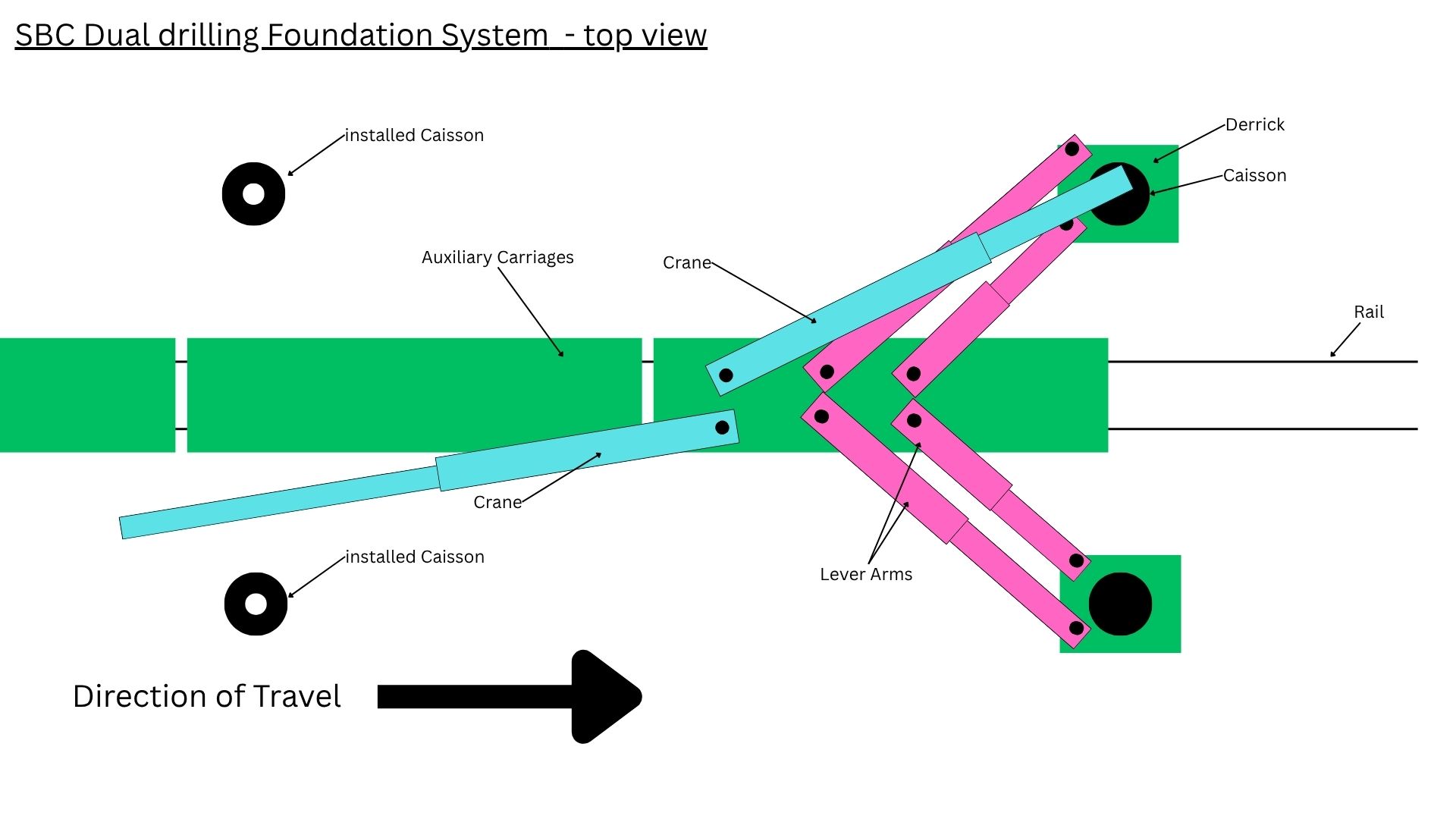
The ground-based drilling train. Central chassis on rail, triangulated hydraulic lever arms positioning the dual derricks at the foundation points either side of the corridor centerline.
Viaduct Machine Method
Rail-Crane Drilling.
A rail-mounted machine plus a remote derrick that drills foundations from the viaduct deck above. Used where ground access is not available — ravines 80–120 m deep, river beds, swamps and mangroves, pristine catchments, the leading edge of self-building MMC-VD finger viaducts, urban constrained sites.
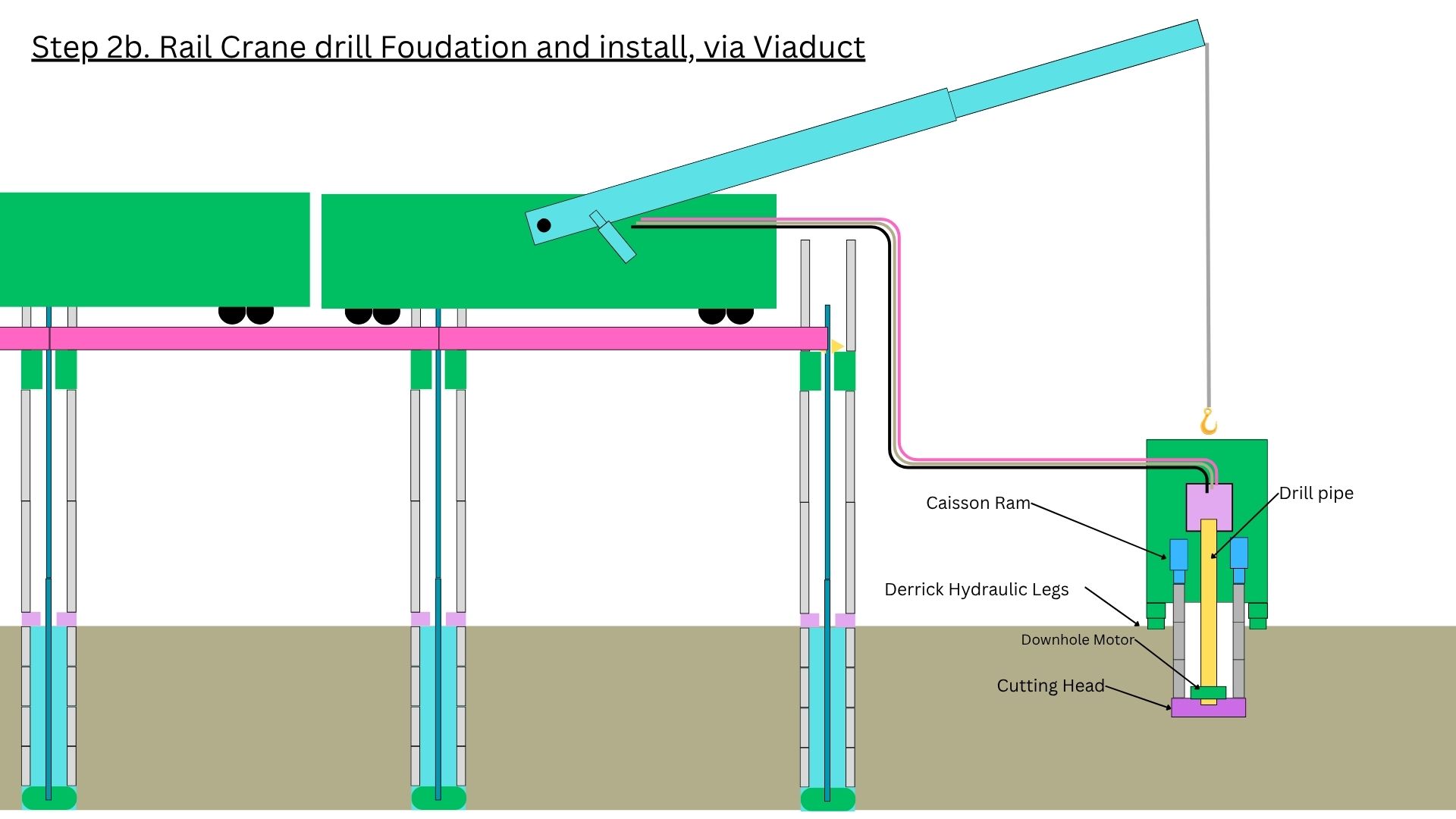
The rail machine stays on the completed viaduct deck behind the build front and carries the power, hydraulics, drilling fluid, cuttings handling, caisson rings, crane, and operator cabin. The lightweight derrick is deployed by crane to the foundation point, sitting on legs into the earth with ballast added where needed. A spooled umbilical connects the two, carrying hydraulic power down, drilling fluid down, and cuttings return up. The fleet is smaller than the primary-method fleet — the difficult-access cases are a minority of total foundation count — but they are unavoidable cases that cannot be designed around. New design technology requiring partner engineering work to mature.
The viaduct foundation drilling machine. Heavy rail machine on the viaduct deck above; lightweight derrick deployed by crane to the foundation point on legs into the earth.
Engineering Memos
The Memo Series.
A scope-and-architecture memo for each drilling machine design, plus detailed memos on the principal subsystems as the design work matures.
Memo 5 · Build
The Ground-Based Foundation Drilling Machine
Scope document for the primary drilling method — a self-supplied drilling train running on rail ahead of the topside construction team. Triangulated hydraulic lever arms positioning single or dual derricks at the foundation points. Configurable for existing rail, pre-laid rail, self-laid track, or tracked propulsion. The production fleet that drills the bulk of the corridor.
Scope document for the viaduct foundation drilling machine that drills foundations at locations where ground access is not available — ravines, river beds, swamps, pristine catchments, MMC-VD self-building, urban constrained sites. New design technology: rail machine on viaduct deck plus crane-deployed derrick anchored by legs into the earth and ballast where needed.
The sacrificial hybrid cutter head architecture in detail — cutting face wear modes, cooling via drilling fluid, mass-flow trade-offs, transition from drilling tool to permanent foundation anchor. Detailed-design treatment for the cutter head as a discrete subassembly.
Coming soon
Future memo
Drilling Fluid System & Down-Hole Pumps
The fluid circuit: feed, drilling fluid composition, down-hole pump architecture, cuttings return, surface separation, and the closed-loop fluid economy that makes the system tenable in pristine and water-sensitive environments.