Every MMC corridor carries HVDC transmission. Joined across borders, national grids become one linked network: power moves from where it is made to where it is needed, across regions, weather systems and time zones. Linked grids give stability and flexibility.
Estimated benefit of cross-border electricity trade in the EU in 2021, against no cross-border capacity.1
Each EU country to be able to import at least 15% of its generating capacity from neighbours by 2030.2
China's Changji–Guquan ±1,100 kV line carries 12 GW from Xinjiang to Anhui, in service since 2019.3,4
In a modelled 100% renewable European grid, interconnection cut the storage capacity needed by 31% on average.5
Moving 2,500 MW over 800 km loses about 2.6% on an 800 kV HVDC line, against 9.4% on a 400 kV AC line (manufacturer figures).6
The Australia–Asia PowerLink, a 4,300 km HVDC subsea cable from the Northern Territory to Singapore, received Australian environmental approval in August 2024.7
AEMO's 2026 plan needs about 6,000 km of new transmission in the eastern states by 2050.8 On MMC, that transmission runs on the same structure as the rail.
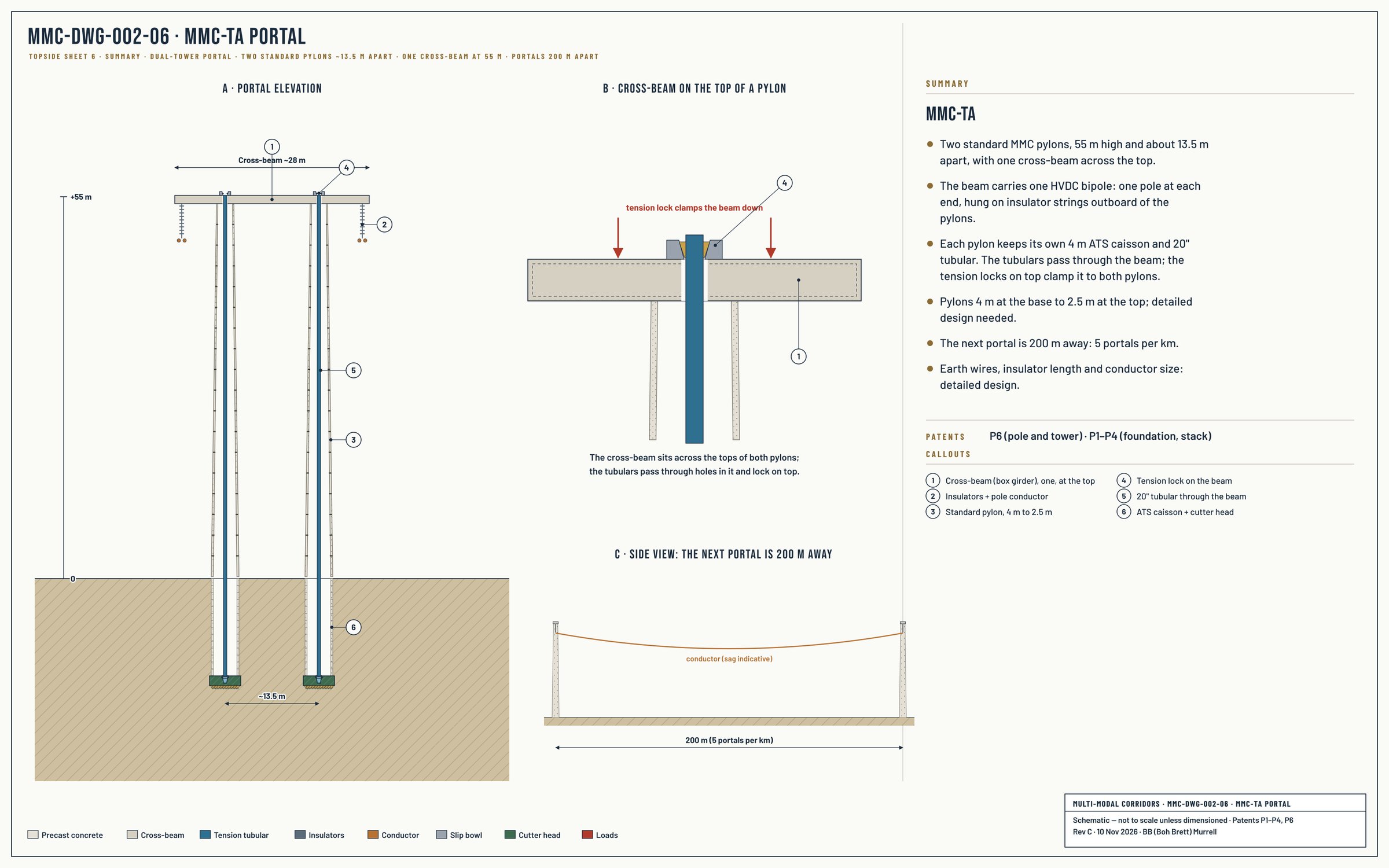
HVDC is carried on the corridor structure: on arms on the viaducts, and on the MMC-T towers where a line runs on its own. The same corridor that links two nations by rail links their grids.
